


Giacomo Bucci
artist of movement and the soul of things
CURATORIAL CONCEPT, POSITIONING AND EDITORIAL FRAMEWORK
curated by Loredana De Pace / Studio CAOS
For decades, Giacomo Bucci has pursued a remarkably coherent artistic inquiry centred upon a fundamental conviction: photography is not tasked with representing reality, nor should it be confined to the mere recording of what the eye perceives through the viewfinder. For Bucci, photography is a transformative act, an experience that establishes an intense connection between the photographer and the subject photographed, ultimately revealing what he describes as the “soul of the subject”, whether place, object, or human being.
Bucci’s practice is emotional and visionary. Time, and the connection forged through time, constitutes its essential element. Photography becomes a form of courtship with the subject; Bucci does not cease until that relationship fully unfolds, until he encounters the deeper meaning of the protagonist of his images.
Although his photographic journey was interrupted by a lengthy hiatus, Bucci’s devotion to photography remained unchanged. The essence of his approach has endured, albeit through inevitable technological transformations. From analogue photography – with its dense, tactile slides rich in material presence – he moved into the digital realm, while preserving, as far as the medium allows, a similarly material quality. Time, once inscribed on film, now settles upon the sensor.
Throughout his lifelong engagement with photography, Bucci has developed and refined a number of recurring themes, which may be summarised as follows.
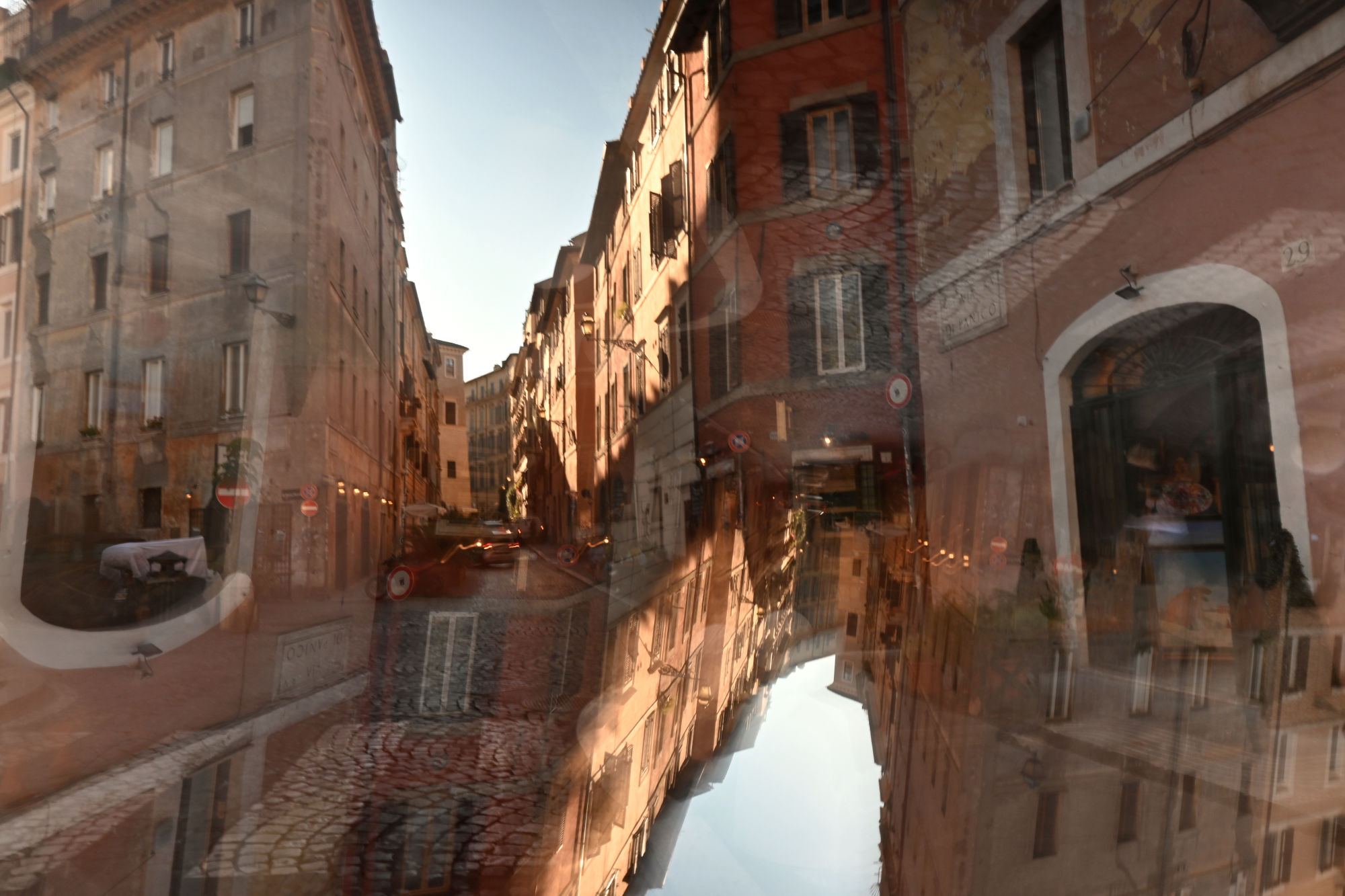
MOVEMENT AS AN EXPRESSIVE LANGUAGE
At the core of Bucci’s oeuvre lies what may be described as:
- “movement photography”;
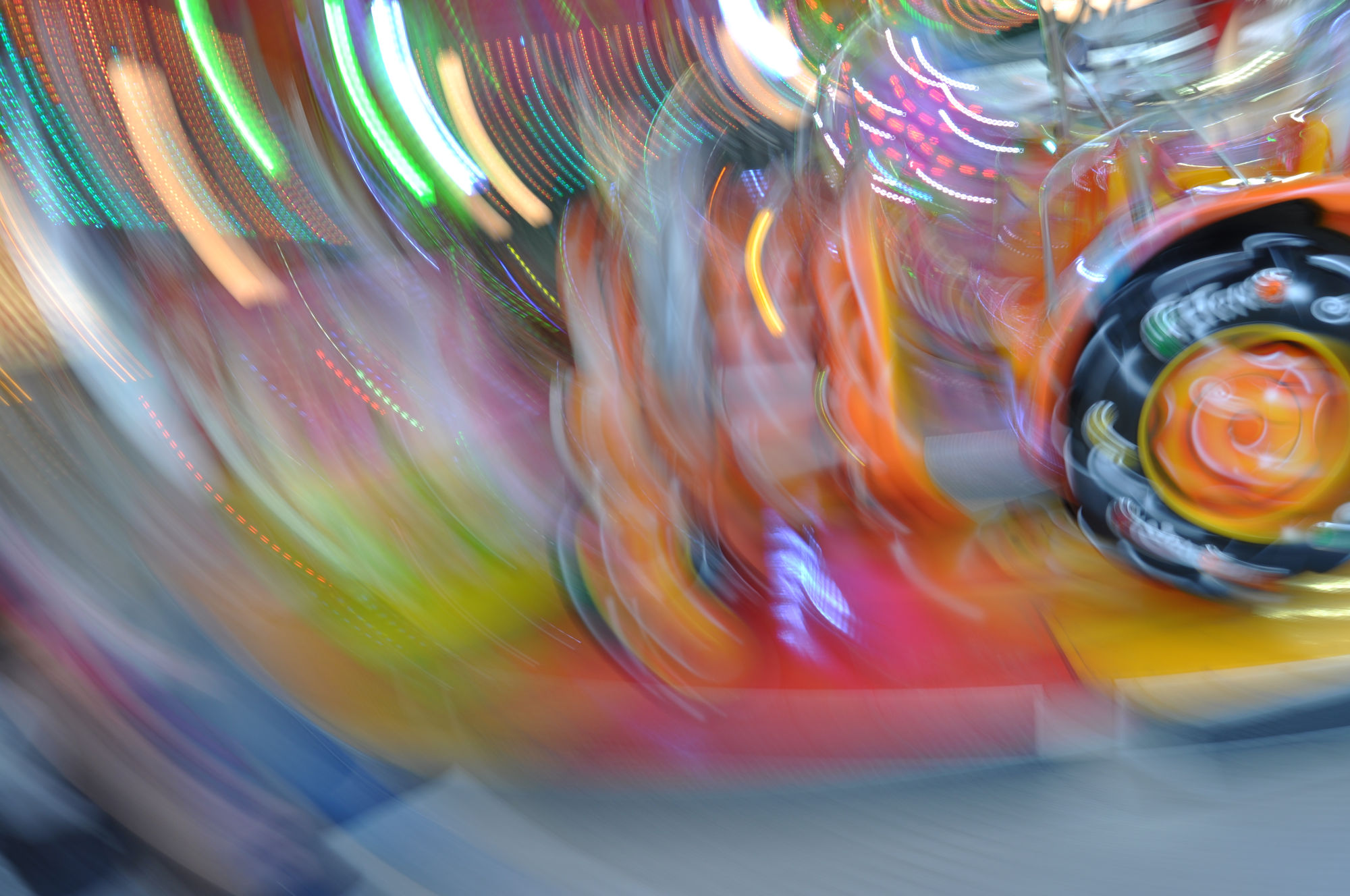
- “contemporary photodynamism”, also known as ICM (Intentional Camera Movement).
Bucci deliberately employs camera movement to:
- transfigure reality;
- stratify time;
- establish a relationship with the subject capable of revealing its genius loci.
Movement serves as a means to “capture the soul of matter” and to “rescue from the oblivion of time precious fragments of life” that he recognises and with which he enters into dialogue.
GIACOMO BUCCI AND THE LEGACY OF FUTURISM
Bucci consciously positions himself within the lineage of:
- Futurism;
- the Photodynamism of the Bragaglia brothers.
Like the figures from whom he derives part of his cultural inheritance, Bucci investigates dynamic perception. Yet, although the writings published on his website clearly demonstrate his affinity with these historical moments in photography, his artistic personality ultimately leads him elsewhere.
His departure is, first and foremost, a distancing from the political alignment historically associated with Futurism. Equally, his work diverges from that of Anton Giulio Bragaglia in both technique and outcome. It is no coincidence that one of the principal sections into which I have organised his work bears the title “I Am Not Bragaglia”.
It is undeniable that Bucci’s photography engages in dialogue with the history of the medium, recalling figures such as Anton Giulio Bragaglia, Étienne-Jules Marey and Eadweard Muybridge, as well as the Futurist concept of dynamism. Yet this dialogue is neither nostalgic nor philological. Rather, Bucci translates those extraordinary avant-garde intuitions into a contemporary practice that is both digital and chromatic, extending their relevance beyond their original historical context.
DEMATERIALISATION OF REALITY
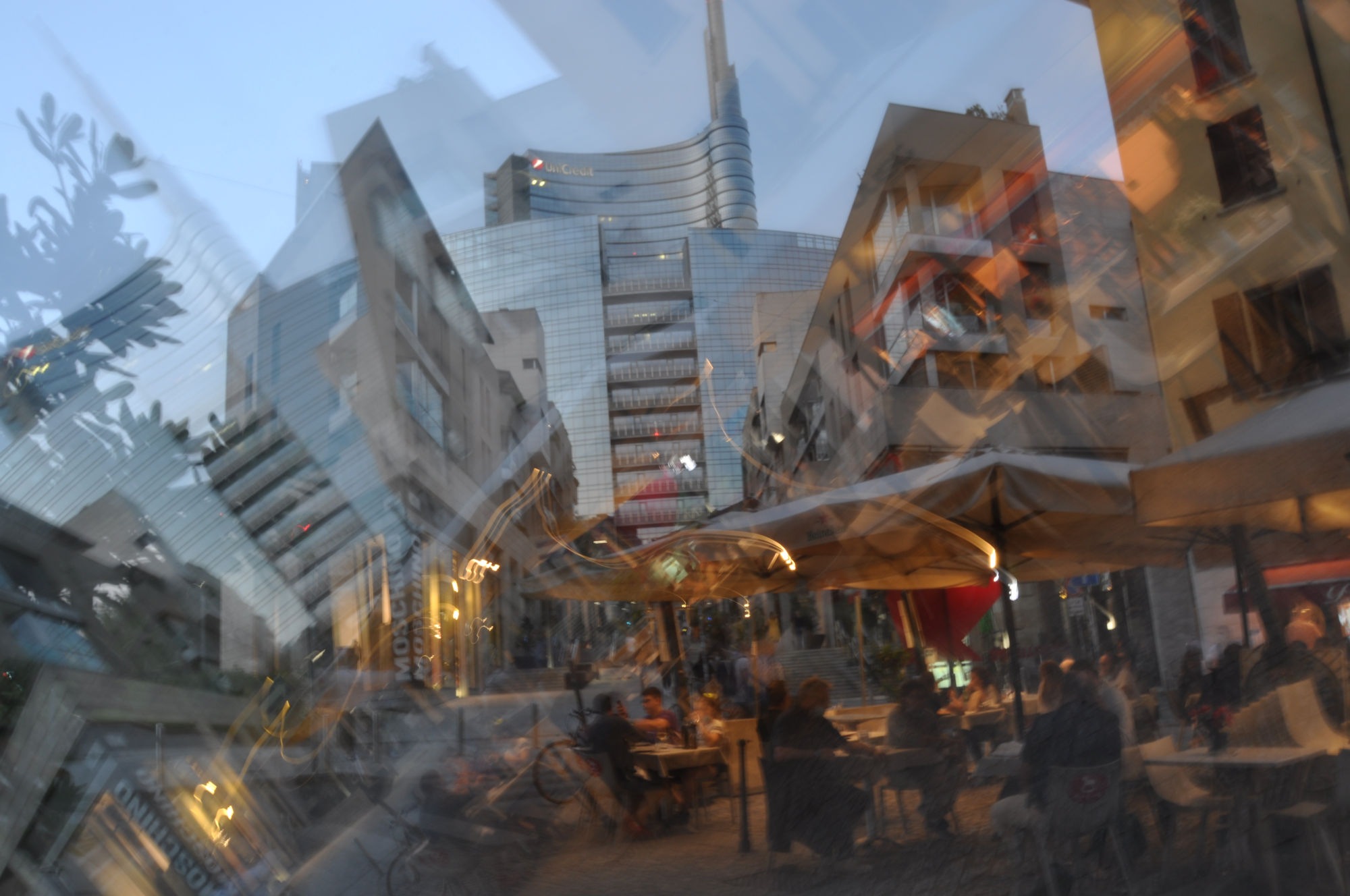
One of the most persistent and dominant themes in Bucci’s work is the dissolution of stable form, the loss of material certainty through which reality is conventionally perceived: structured, fixed, and seemingly immutable. Bucci alters the rules of perception. He understands that within matter everything is alive; it is precisely this vitality that he seeks. He allows himself to be received by it before ultimately photographing it.
For this reason, his images dissolve contours, draw light and colour towards new configurations, fragment space, and render visual matter unstable, yet profoundly truthful.
This gives rise to the dreamlike, metaphysical, and at times abstract or surreal qualities that permeate his imagery. Photography relinquishes its descriptive function and assumes instead the role of perception, memory, and a renewed materiality (the very soul) of the subjects portrayed.
TIME AS PHOTOGRAPHIC MATERIAL
Time has always occupied a central position in Giacomo Bucci’s practice. There is the early photographic time of his youth, experienced through analogue photography; the time of interruption and voluntary distance from the medium, marked by the abandonment of an unrealised project; and, above all, the mature time of return, when a dialogue never truly interrupted finds its voice once again.
Bucci’s intentional camera movement transforms Henri Cartier-Bresson’s notion of the “decisive moment” into an extended encounter, a complex temporal trace condensed into a single image.
This fundamentally distinguishes his work from classical street photography and documentary practice. The metamorphosis of light and form becomes an intentional conversation with the visible world. Through the complicity of time, forms do not merely transform; they assume deliberate trajectories, inflections, and new identities.
The cities he photographs — Milan, his Mantua, London — are places of emotional significance, interpreted and returned to us through an atmosphere saturated with memory. His cities become apparitions; his nocturnal scenes luminous ghosts; his mountain landscapes interior territories.
PHOTOGRAPHY AND THEORY
Bucci’s practice is equally distinguished by sustained theoretical reflection. He writes, reflects, writes again, and leaves behind a substantial body of documentation — most notably through his website. These texts testify to the originality of an artistic vision rooted in a long historical trajectory: the relationship between analogue and digital photography, the coherent evolution of a language capable of renewal while remaining anchored to solid theoretical foundations.
Bucci is therefore not only a photographer but also a theorist of photography, meticulously documenting his own practice through written reflections and methodological principles that constitute a legacy for future generations.
HIS AESTHETIC IN SUMMARY
We have spoken of Futurism and Abstract Pictorialism within the broader framework of experimental photography, sometimes abstract, sometimes closer to visible reality, yet always permeated by a distinctly Italian metaphysical sensibility.
The principal themes of Bucci’s work are movement; the relationship between the various temporal dimensions of photography (concentration, contemplation, discovery, synergy with the subject, recognition, and only then the act of exposure); the transformation of reality that inevitably results from this process; visual memory as a repository of experiences and a theoretical-practical legacy; the dematerialisation of form arising from an uncompromising desire to establish an authentic relationship with the subject; photography as an emotional and immersive experience in all its phases; and a contemporary dialogue with the origins of movement photography, from Futurism and the Bragaglias onwards.
His photography seeks to transform the world from what is merely visible into what emerges through observation and inner perception.
NEW SECTIONS
In light of these considerations, it seemed natural to organise Bucci’s works into thematic groupings that define who he has been, who he is today, and who he will remain through his images. The sections are entitled:
- I Am Not Bragaglia — a selection of Bucci’s finest movement-photography works;
- The Original — referring to the concept of the matrix, the source from which an image is generated or reproduced;
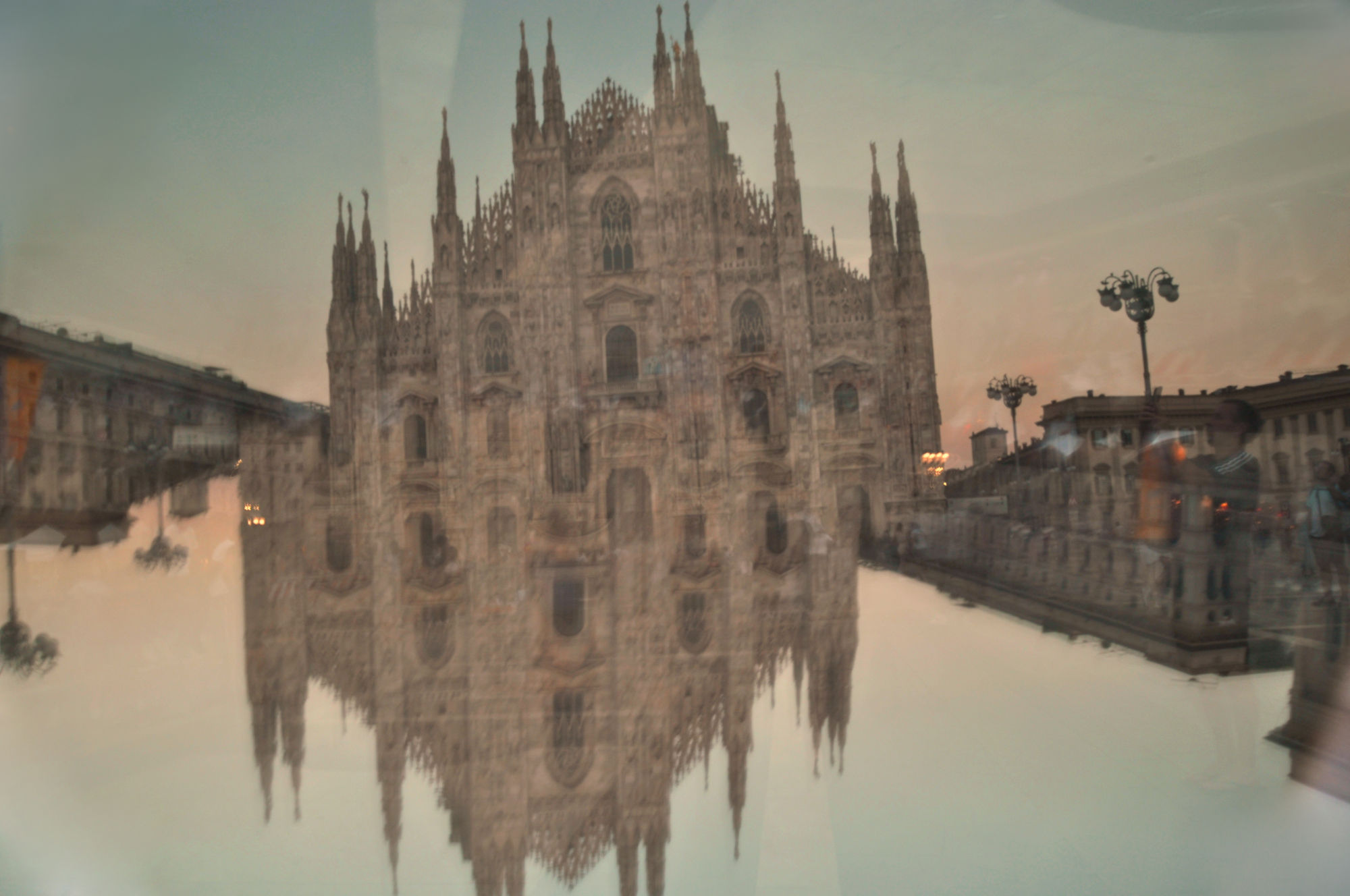
- Upside Down – Au Contraire — works revealing a specific gesture employed by Bucci during exposure, activating imagination and inviting us to view the world from another perspective;
- Abstractions — dedicated to works in which reality progressively disintegrates and transforms into something else entirely, opening the gates of imagination and free interpretation;
- OntheReal — as previously discussed, the metaphysical-surreal component is integral to Bucci’s strongest images, leading us elsewhere while remaining simultaneously upon, within, and beyond reality itself;
- Human Being — a celebration of extraordinary human presences, interpreted through Bucci’s distinctive vision, reflecting the Pirandellian multiplicity of the self: one, no one, and one hundred thousand;
- ICM – Intentional Camera Movement — the overarching category gathering together the intentional movements characteristic of Bucci’s approach.
Given the continuity of his artistic philosophy, some images inevitably intersect multiple thematic territories. This is entirely appropriate. Bucci has never separated matter from thought, theory from photography. Why should he begin now?
In the contemporary landscape of visual communication, photography has adopted many modes of expression. Some resonate with Bucci’s practice, albeit emerging long after the avant-garde era in which he first developed his language.
For Bucci, this entails a continual necessity to update and renew meanings while remaining faithful to the coherence of his technique and thought. For photography itself, it offers an opportunity to embrace an artist who spoke a particular photographic language while its grammar was still being formed.
As curator, my invitation is twofold: to the art world, to recognise the value of an experimental pioneer; and to Bucci, to continue observing the evolving language of contemporary photography, discovering new affinities and surpassing himself once again through renewed experimentation.
FUTURE DEVELOPMENTS: FRONT / BACK
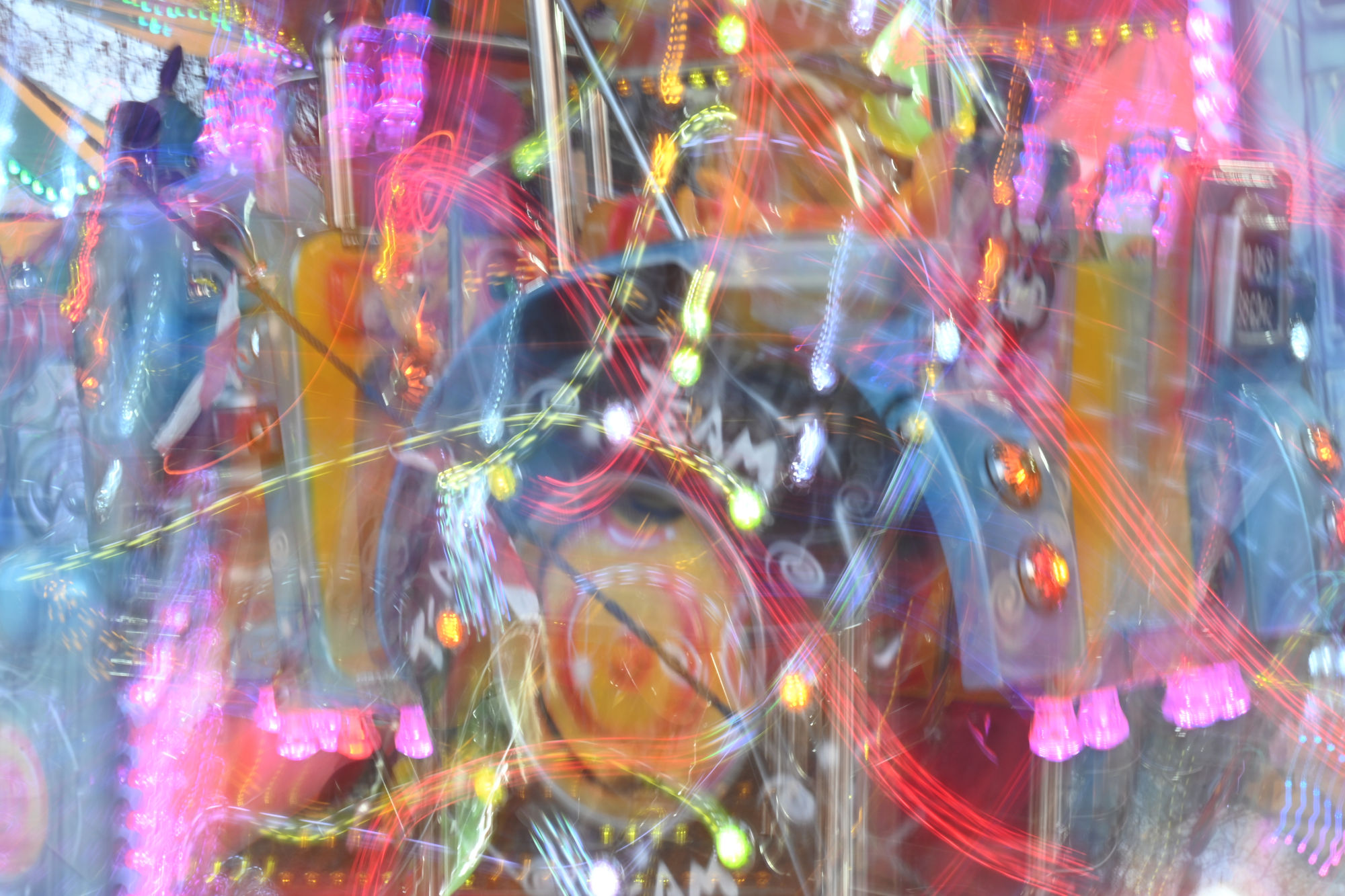
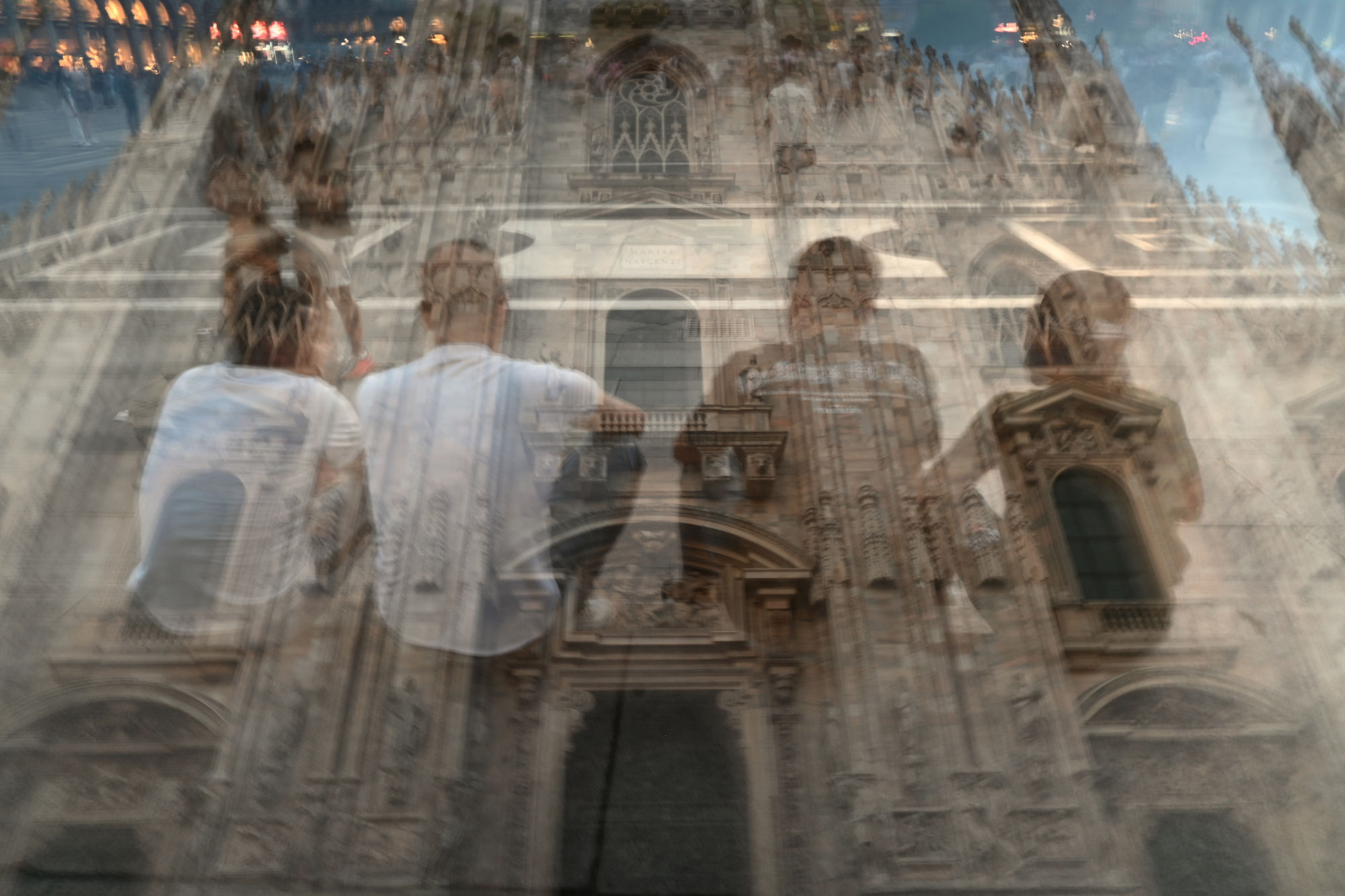
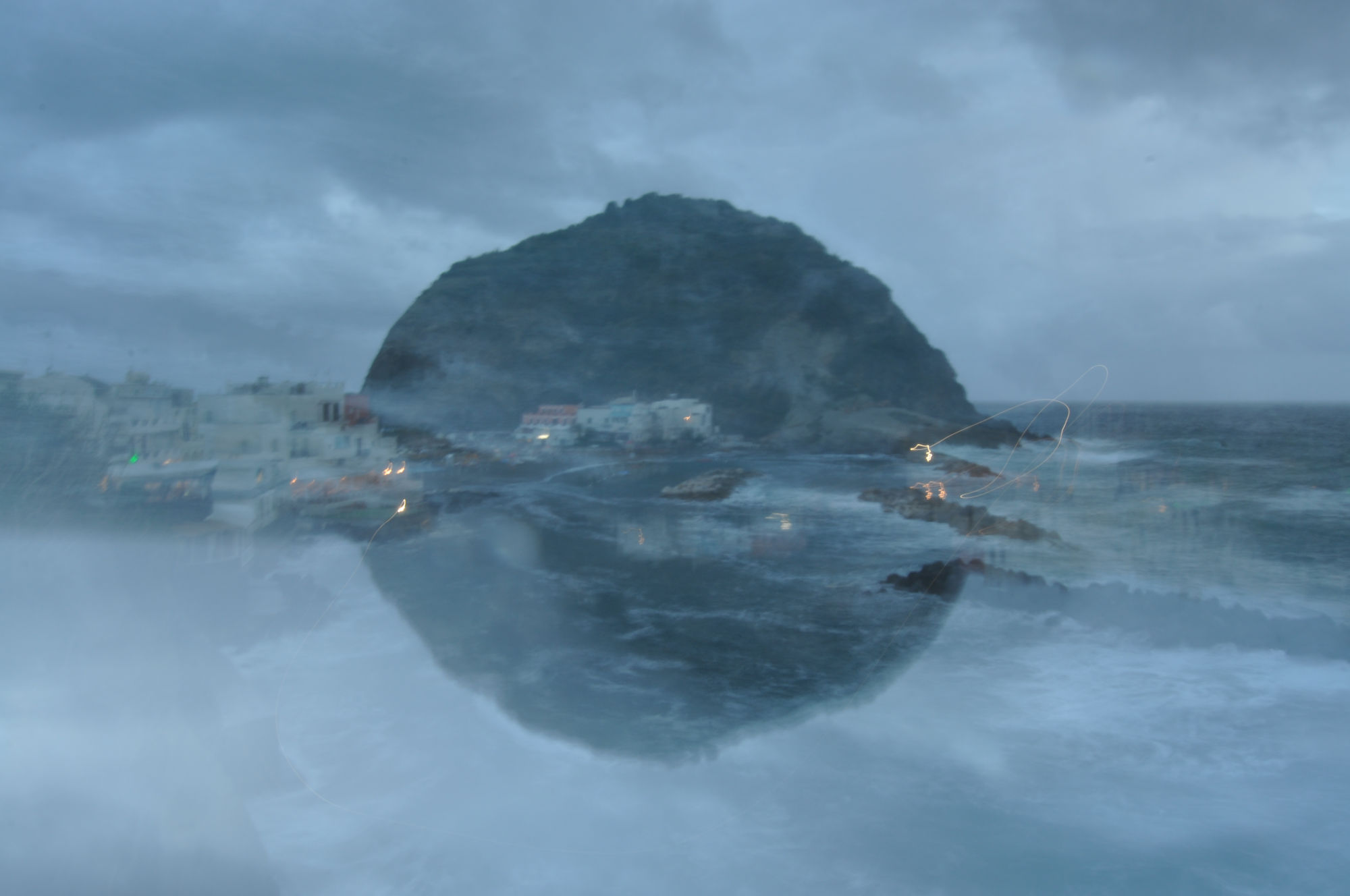
Following my most recent meeting with Giacomo Bucci, the artist presented a number of images belonging to a new project, an important development of what I consider his most accomplished body of work, namely Upside Down.
These new explorations represent the natural continuation and evolution of Bucci’s lifelong project: an investigation into matter as something that is never a single instant but rather an accumulation of moments to be observed, interpreted, and transformed into images.
This time, Bucci positions himself at the centre of the scene, photographing both what lies before him and what lies behind him simultaneously, without removing his finger from the shutter release.
After three years of experimentation and reflection, he has concluded that success depends upon identifying situations capable of merging and entering into dialogue. Essential, distilled scenes characterised by differing lights and textures are mentally pre-visualised as a single image. Through a rapid movement, Bucci photographs the scene in front of him and, while swiftly rotating and lowering the camera, reaches the space behind him, completing the exposure. Everything occurs within a matter of seconds. Everything takes place simultaneously. Hence the title: Front / Back.
Contrasting lights, varied textures, exceptional powers of previsualisation, and a refined capacity for synthesis constitute the coordinates of this process. Ideally, the location should remain recognisable, enabling the viewer first to identify reality and then to lose themselves within the multiple scenes condensed into a single photograph.
publication date 6/2026